
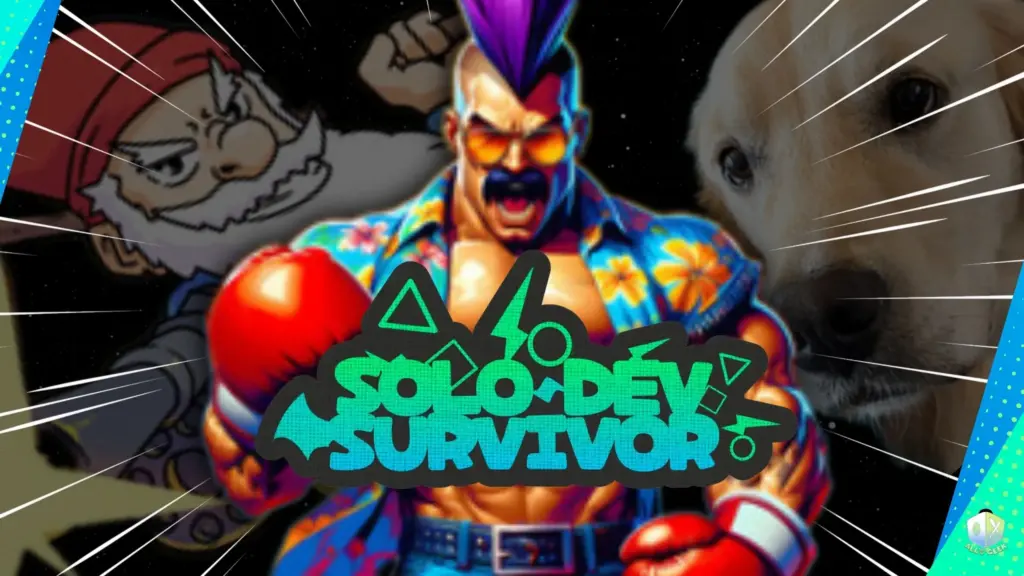

The March 2026 Solo Dev Survivor Showcase pulls together a set of indie games built by individual developers or very small teams, and you can feel that difference right away. These are not games shaped by large production pipelines, but tend to follow one strong idea and push it as far as possible, even if that means getting weird, rough around the edges, or very specific in tone.
There is a kind of stubborn focus across the lineup. Some games chase a single mechanic until it becomes the whole experience, while others lean hard into personal storytelling or unusual themes that would be difficult to justify in a larger studio setting.
What is the Solo Dev Survivor Showcase?
The Solo Dev Survivor Showcase highlights games created primarily by one developer, or extremely small teams working in a similar way. It focuses on projects where creative direction is tightly controlled, often resulting in stronger identity, even when scope is limited.
For players, it is a chance to see ideas that feel more direct. There is less filtering between concept and execution, which means mechanics and themes often feel more personal.

Full List of March 2026 Solo Dev Survivor Showcase Games
- Golel
- Kholin Echo
- Growing My Manhole
- Golden Retriever Simple Life
- Temple of Eternal Suffering
- Nimillion – The Last Expedition
- The Light Of Vertical
- Mesoké
- The Transference
- Gate Breaker: Ascension
- Arms of God
- Demon Lord: Just a Block
- Tenvader
- Raging Bill
- Situation Normal
- Lawnpocalypse
- A Story of Questions
- Cup Or Die
- The InBetween
- Blue Balls
- Golden_Self
- CONFINED: Leaving OKB-134
- Crimson Furnace
- Cafe New York 9/11
- Vision of Meia
- Veinrider
- Droplet: States of Matter
- Obitus
- Summoner Tale
- Picnic In The Zone
- Case File Archived
- Goodyssey
- Thumps & Blows
- Katuba’s Poacher
- Void Salvage
- Excoverse
- Kisaragi
- Arcadium – Space Odyssey
Horror, Isolation, and Psychological Pressure
A large portion of this lineup leans into isolation, often placing the player in confined or unstable environments. The Transference and CONFINED: Leaving OKB-134 both trap players in enclosed spaces where tension builds through uncertainty and limited control. Case File Archived and A Story of Questions take a slower approach, using small changes and dialogue to create unease.
Some titles approach horror through heavier subject matter. Final Fall deals directly with mental health and perception, while Cafe New York 9/11 focuses on a grounded, real-world moment, shaping its story through conversation and atmosphere rather than traditional mechanics.
Even when the tone shifts toward absurdity, the tension remains. Kisaragi mixes urban legend horror with humor, creating a strange balance where the player is never fully sure whether to take events seriously.
Action, Combat, and Mechanical Focus
Many solo developers build around a single gameplay loop and refine it. Golel stands out by reworking turn-based combat into something physical, where the environment becomes part of the strategy. Temple of Eternal Suffering and Gate Breaker: Ascension both focus on combat progression, layering customization and movement into their systems.
Fast, reactive play shows up in games like Golden_Self and Situation Normal, where precision and control matter more than scale. Arms of God pushes that idea further with weapon stacking and constant combat pressure, while Download Demon Lord: Just a Block slows time itself, turning movement into a tactical decision.
Roguelikes, Survival Loops, and Scaling Systems
Run-based design appears throughout the showcase, often tied to survival or incremental growth. Kholin Echo blends space exploration with repeated runs across procedurally generated areas, while Void Salvage and Arcadium – Space Odyssey build around progression through upgrades and resource collection.
Other games lean into scaling systems more directly. Growing My Manhole turns expansion into the core mechanic, while Veinrider focuses on movement and upgrades through a confined structure. Lawnpocalypse mixes roguelike progression with a simple, almost mundane activity, creating contrast between task and threat.

Exploration, Adventure, and World Design
Several games focus on movement through unusual or hostile environments. Nimillion – The Last Expedition builds traversal around thruster-based control, while Mesoké takes a quieter approach, using flight as a way to explore memory and emotion.
The Light of Vertical returns here with its layered world design, and The InBetween combines exploration with emotional storytelling. Vision of Meia and Picnic In The Zone both lean into mystery, where the player uncovers information gradually while navigating unstable spaces.
Simulation, Systems, and Unusual Concepts
Some of the most distinct entries come from games that center on everyday or unexpected systems. Golden Retriever Simple Life focuses entirely on caring for a pet, building a loop around routine and interaction. Crimson Furnace mixes management with darker elements, placing the player in control of a tavern tied to secretive activity.
Obitus introduces survival in a competitive setting, while Raging Bill treats its world as a sandbox, allowing players to approach it from multiple angles. These games often feel like experiments that grew into full projects.
Puzzle, Hybrid Mechanics, and Strange Ideas
Solo developers tend to experiment more freely with structure. Tenvader combines familiar arcade concepts into a single system, while Cup Or Die mixes skill-based play with roguelike elements and risk.
Droplet: States of Matter builds movement around shifting physical states, and Goodyssey plays with perception and spatial logic in ways that challenge how environments are understood. Thumps & Blows keeps things simple but expressive, focusing on timing and player interaction rather than complexity.
The March 2026 Solo Survivor Showcase Exists to Support Indies
The March 2026 Solo Dev Survivor Showcase stands out because it does not try to smooth out its differences. Some games are rough, some are highly polished, and others feel like experiments that grew larger over time. That unevenness is part of the appeal.
There is a sense that each project reflects one person’s priorities, like take a specific mechanic, a personal story, or just a strange idea that would not fit anywhere else, it comes through clearly. That makes this showcase less predictable than most. You move from horror to humor, from quiet exploration to intense combat, without any clear pattern. For players willing to spend time exploring, that unpredictability is where most of the interesting finds tend to be.
Check out our previous Solo Survivor Showcase and follow us if you’d like a chance to be featured next!
Want more Indie Game Articles? Check out the page!

Geek out with us!
I Married a Monster on a Hill (Award-Winning Series)